
Performance
Athletic & academic excellence
A program to maximize the performance and potential of already outstanding individuals.
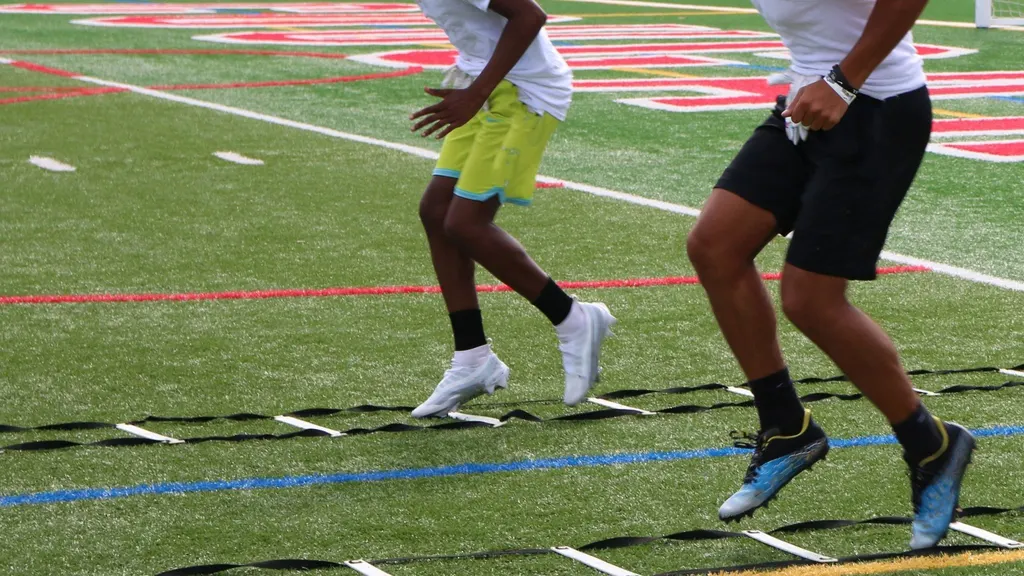
The Athletic and Academic Excellence program at WIN is for students and athletes who are already doing well and want to perform at their best, with no diagnosis required. In Houston and San Juan, we measure how a brain focuses, reacts, regulates and coordinates, then train those skills with the same technologies and the same measurement discipline we use in clinical care, so that a family can see the gains rather than take them on faith.
What is the Athletic and Academic Excellence program?
It is a performance program built on the Franceschi Method®: a baseline evaluation, a written individualized plan and training sessions whose results are re-measured over time. Focus, reaction time, emotional regulation and coordination are brain functions, and brain functions can be trained. This is not tutoring or a sports camp, and it does not replace a coach or a teacher; it works on the nervous system a student or athlete brings to practice and to class.
Who the program is for
- Students who do well but tire quickly, lose focus during long exams or freeze under test pressure.
- Student-athletes balancing training, travel and grades who want sharper attention in both.
- Athletes who want faster reaction time, steadier balance and better composure in competition.
- Teens preparing for college entrance exams, auditions or tryouts.
- Adults who compete, perform or work in demanding roles and want to keep their edge.
No diagnosis is needed. If a concern does surface during the evaluation, the physician will tell you and adjust the plan.
What we train and why it works
The brain adapts to what it practices, a property called neuroplasticity, and performance training uses it deliberately. Neurofeedback trains brainwave patterns in real time, rewarding the states associated with calm, sustained attention so they become easier to reach on demand. Motor, balance and coordination work in the gym builds the connections behind timing and body control, and the primitive reflex test can reveal reflex patterns that interfere with smooth movement. The Franceschi Neuro-Auditory Protocol targets auditory processing, which affects how quickly a player hears a call or a student follows a lecture. taVNS supports calm and focus, and nutrition gives the brain the building blocks for neurotransmitters, energy and recovery.
How WIN measures performance
Every program starts with Phase I: the initial medical evaluation, roughly 1 to 1.5 hours with the physician and about 3 hours in the office, with specialized laboratories such as nutritional deficiencies and metabolic and hormone panels chosen per person. The WIN neurodevelopment evaluations then set the baseline: the Franceschi Method development test for attention, memory, balance and coordination, the primitive reflex test, and the listening test (CAPD) and tympanogram for auditory processing. Neurofeedback sessions generate their own metrics, and the development test is repeated to compare against baseline, alongside the observations of parents, coaches and the person being trained.
How the Athletic and Academic Excellence program works: the three phases
Phase I — Evaluation and planning. Evaluation, labs and the follow-up appointment identify anything medical, such as a nutritional deficiency, that would hold performance back.
Phase II — Evaluation results and protocols. A nutrition and supplementation plan when labs call for it, then the WIN tests and a written training protocol targeting the specific skills to improve: attention, memory, reaction time, balance, regulation or auditory processing.
Phase III — Multisensory and psycho-emotional therapy. Training sessions combining neurofeedback, gym work, the Neuro-Auditory Protocol and taVNS as the plan calls for. Results are measured constantly, and parents receive reports and training so the gains carry over to the field and the classroom.
What families can expect
Training happens in scheduled sessions at the Houston or San Juan center, and families in Texas, Florida and Puerto Rico can do follow-up visits by telemedicine. Early changes families and coaches often describe are steadier focus during long tasks and more composure under pressure; speed and coordination gains are read from the re-test rather than guessed. Consistency, sleep and nutrition are the family's part of the plan.
If your student or athlete is ready to train the brain behind their performance, we would be glad to show you what the evaluation measures. Request an orientation through our contact page for Houston or San Juan.
How it works
How WIN approaches athletic & academic excellence
- I Evaluation and planning Initial medical evaluation · Specialized laboratories · Follow-up appointment
- II Evaluation results and protocols Medical and nutritional protocols · WIN neurodevelopment evaluations · Treatment protocol discussion
- III Multisensory and psycho-emotional therapy Therapy sessions and progress measurement
Therapies and services that help
All servicesNeurofeedback
Real-time brainwave training for focus, regulation and learning.
Learn moreGym
Motor, balance and coordination work that builds brain connections.
Learn moreFranceschi Neuro-Auditory Protocol
Integrated Listening System (ILS) for auditory processing.
Learn moreNutrition
Dietary changes that give the brain the building blocks it needs.
Learn moretaVNS
Transcutaneous auricular vagus nerve stimulation — gentle, non-invasive stimulation through the ear to support calm, mood and focus.
Learn moreStories shared with WIN
In their own words
“I had a family member that used WIN and she had great results. I decided to utilize it myself simply to work on myself — I am ADHD and sometimes lack focus. I am in the initial stages, but I am already amazed.”
Read the full story
I am currently a patient for WIN. I had a family member that used WIN and she had great results. I decided to utilize it myself simply to work on myself. I am ADHD and sometimes lack focus. I am in the initial stages, but I am already amazed at what has happened to me. I have changed my diet, as my blood screen showed allergies to different foods. I am so excited to see what happens with my ability to focus in the future. Thanks WIN. You guys are great.
Adult patient
Individual experiences vary. Testimonials describe these families’ experience and are not a promise of results.
Common questions
Can neurofeedback or brain training improve focus and performance in a healthy child or athlete?
Focus, reaction time and regulation are brain functions, and the brain adapts to what it practices, so they can be trained in a healthy person just as a muscle can. Neurofeedback rewards the brainwave patterns associated with calm, sustained attention so they become easier to reach on demand, and motor and auditory training build the connections behind timing and listening. Gains vary by person, which is why WIN measures a baseline and re-tests instead of promising a result.
Who is the Athletic and Academic Excellence program for?
Students, student-athletes, teens preparing for exams or tryouts, and adults in demanding roles who are already doing well and want to perform at their best. No diagnosis is required. The evaluation identifies which skills, such as attention, memory, balance, reaction time or auditory processing, have the most room to improve, and the plan is written around those.
How is performance measured, and how do we know it is working?
The program starts with a baseline: the Franceschi Method development test, the primitive reflex test, and the listening test and tympanogram for auditory processing, alongside the medical evaluation and labs. Neurofeedback sessions produce their own metrics session by session, and the development test is repeated to compare against baseline. Families receive reports, and the observations of parents, coaches and the person training are part of the picture.
Do you accept insurance?
Please contact our team for current information on insurance, payment options and what to expect for your plan — it varies by location and by service. We will walk you through it before your first visit.
Do I need to travel to Houston or San Juan, or can we start remotely?
Telemedicine is available for families in Texas, Florida and Puerto Rico, and many families start that way. The WIN neurodevelopment evaluations and the Phase III therapies happen in person at our Houston or San Juan centers; international families are welcome at both.
Not sure which condition applies?
Request an orientation — our team will guide you.