
Neurodevelopmental
Dyslexia
A decoding problem: difficulty understanding letters and numbers when reading or hearing them.
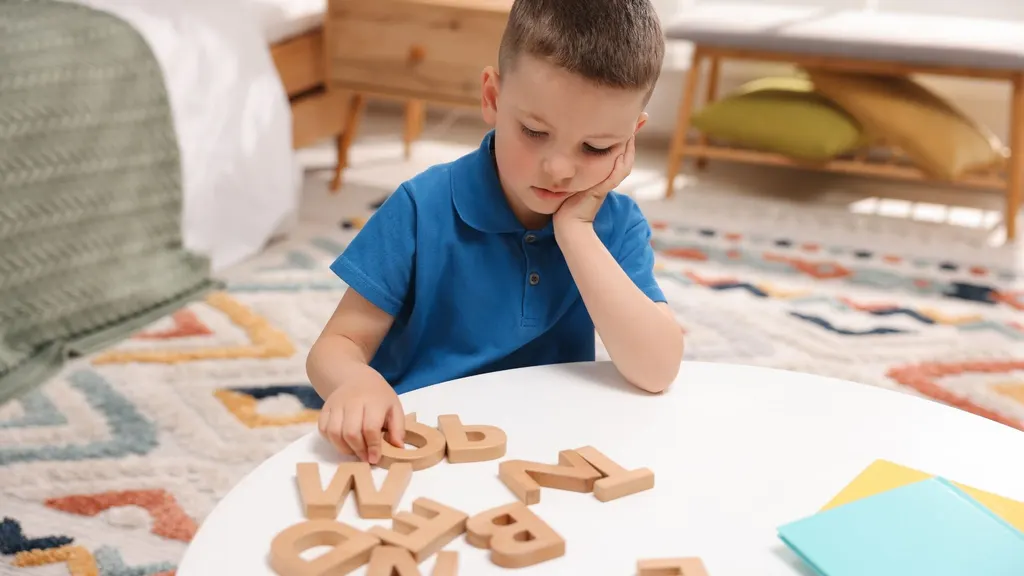
Dyslexia is a learning difference that makes reading, spelling and decoding far harder than a child's intelligence would predict, and it often shows itself before the first reading lesson. At WIN in Houston and San Juan we evaluate children, teens and adults for the auditory, visual, motor and medical factors that can sit underneath dyslexia, then build an individualized protocol that trains those systems directly and supports your child's accommodations at school.
What is dyslexia?
Dyslexia is a specific difficulty with decoding: connecting the sounds of language to the letters that represent them, quickly and automatically. Reading depends on the brain hearing the sounds inside a word, holding them in sequence and matching them to print; in dyslexia one or more links in that chain work slowly, so reading stays effortful even after years of practice.
It is one of the most common learning differences and it runs in families. Dyslexia is not a vision problem, not laziness and not low intelligence; many children with dyslexia are bright, verbal and creative, which is why their struggle with print confuses parents and teachers.
Early signs parents notice
Dyslexia is usually identified around second grade, but the clues show earlier.
Before reading (ages 3–5)
- Does not enjoy rhyming games or cannot tell which words rhyme
- Trouble learning letter names or the sounds letters make
- Mixes up sequences: days of the week, counting, a familiar song
- Confuses left and right well past the usual age
School age
- Reads slowly and guesses at words from the first letter
- Spells the same word three different ways on the same page
- Reverses letters or numbers (b/d, 6/9) long after classmates stopped
- Reads a passage correctly but cannot say what it was about
- Avoids reading aloud or melts down at the homework table
If several of these describe your child, especially with a family history of reading difficulty, evaluate now rather than waiting for school to "catch it."
What causes dyslexia, and why that matters for treatment
Research points to differences in how the brain processes the sounds of language, with a strong hereditary component. WIN evaluates the systems that must work together for reading to become automatic. Auditory processing is central: if the brain does not clearly hear the difference between "pin" and "pen," matching sounds to letters becomes guesswork. Visual tracking matters too, since the eyes must move smoothly across a line.
WIN also looks for retained primitive reflexes, which can interfere with eye movement, posture and sitting still over a page, and for medical factors such as nutritional deficiencies, food sensitivities or middle-ear fluid in the years when sound processing was being wired. Each finding points to something specific to treat; WIN does not stop at the label.
How WIN evaluates dyslexia
In Phase I, the initial medical evaluation gives Dr. Báez-Franceschi about 1 to 1.5 hours with your child (roughly 3 hours in the office) to review developmental, medical and school history and run medical and neurodevelopmental tests. Specialized laboratories for learning concerns commonly include nutritional deficiencies, a food allergy panel and metabolic panels, with genetic testing when indicated.
Two WIN neurodevelopment evaluations carry the most weight for dyslexia. The Franceschi Method development test maps motor, visual, sensory and cognitive skills, showing which foundations under reading are still immature. The listening test (CAPD) assesses how the brain organizes and interprets sound, the raw material of phonics. The tympanogram rules out middle-ear problems, and the primitive reflex test flags reflexes that may interfere with eye tracking.
Parents leave with a written, individualized treatment protocol in language a school team can use.
How we treat dyslexia: the three phases
Phase I — Evaluation and planning. The initial evaluation, specialized labs and follow-up appointment establish whether there is a medical or nutritional piece to address first; correcting a deficiency does not teach reading, but it gives the brain the fuel to learn.
Phase II — Evaluation results and protocols. Dietary modification and individualized nutrition and supplementation begin, based on the labs. The WIN neurodevelopment evaluations then shape a therapy plan aimed at auditory processing, visual tracking, primitive reflexes, attention and memory.
Phase III — Multisensory and psycho-emotional therapy. For dyslexia the plan typically includes the Franceschi Neuro-Auditory Protocol (Integrated Listening System) to sharpen the sound discrimination phonics depends on, neurofeedback to strengthen attention and processing speed, and gym and sensory room work to integrate retained reflexes and build the balance that steadies the eyes on a page. Progress is measured constantly, and parents receive reports and training to reinforce the work at home, following the Franceschi Method®.
WIN's reports can be shared with your child's school to support an IEP or 504 plan in the United States, or acomodos razonables in Puerto Rico. Therapy at WIN complements structured reading instruction rather than replacing it.
What families can expect
After the Phase I visits, therapy sessions run on a regular schedule over several months, with re-evaluations along the way. Medical appointments can be done by telemedicine from Texas, Florida and Puerto Rico; in-office therapies happen in Houston or San Juan, and families from elsewhere plan trips around them.
Reading fluency gains are measured over months, not weeks. Parents often notice the first changes outside reading: steadier handwriting, less fatigue after homework, more willingness to try. Your role is active, from home exercises to telling us what the teacher sees; those observations shape the protocol.
If your child is bright but reading is a daily battle, or you recognized the pre-reading signs above, an evaluation can show what lies underneath. Request an orientation for Houston, San Juan or telemedicine. Contact WIN to begin.
How it works
How WIN approaches dyslexia
- I Evaluation and planning Initial medical evaluation · Specialized laboratories · Follow-up appointment
- II Evaluation results and protocols Medical and nutritional protocols · WIN neurodevelopment evaluations · Treatment protocol discussion
- III Multisensory and psycho-emotional therapy Therapy sessions and progress measurement
Therapies and services that help
All servicesFranceschi Neuro-Auditory Protocol
Integrated Listening System (ILS) for auditory processing.
Learn moreNeurofeedback
Real-time brainwave training for focus, regulation and learning.
Learn moreGym
Motor, balance and coordination work that builds brain connections.
Learn moreSensory room
A controlled space for sensory integration and regulation.
Learn moreNutrition
Dietary changes that give the brain the building blocks it needs.
Learn moreStories shared with WIN
In their own words
“Since the very first month, we were able to observe a change in his social interactions, his speech and memory. The team has been with us, hand in hand, throughout the whole process of beginning first grade.”
Read the full story
For us as parents, this has been a great experience, in which we were able to observe huge changes in our son’s overall development. The whole team is wonderful. The specialist who attended our son built a strong connection with him, which was the key to a successful therapy. Since the very first month, we were able to observe a change in his social interactions, his speech and memory. The team has been with us, hand in hand, throughout the whole process of beginning his academic development in first grade. We never miss an opportunity to recommend it and encourage other parents to be part of this experience. Thank you for all you do.
Parents · San Juan
Individual experiences vary. Testimonials describe these families’ experience and are not a promise of results.
Common questions
What are the signs of dyslexia in a young child, before they learn to read?
Before kindergarten, the clues are in spoken language rather than print. Watch for difficulty with rhyming, trouble learning letter names and sounds, mixing up sequences like days of the week, persistent left-right confusion, and mispronouncing or struggling to retrieve familiar words. A family history of reading problems raises the likelihood. None of these alone means dyslexia, but several together are a good reason to have your child evaluated early.
Can dyslexia be treated, or only accommodated at school?
Accommodations such as extra time or audiobooks are valuable and WIN supports them, but they do not change the underlying processing. WIN evaluates the auditory, visual, motor and medical factors beneath a child's reading difficulty and trains those systems directly with therapies such as the Franceschi Neuro-Auditory Protocol, neurofeedback and reflex integration work. This complements structured reading instruction rather than replacing it, and progress is measured over time.
How is dyslexia diagnosed at WIN?
WIN's evaluation begins with a comprehensive medical evaluation and history, followed by specialized labs chosen for the case. The Franceschi Method development test and the listening test (CAPD) are the key neurodevelopment evaluations, complemented by the tympanogram and primitive reflex test. The result is a written, individualized protocol that explains which systems are contributing and how each will be addressed. If a formal psychoeducational diagnosis is needed for school, WIN's findings can support that process.
Is dyslexia related to vision, hearing or auditory processing?
Dyslexia is not caused by poor eyesight or hearing loss, and a child can pass both screenings and still have it. It is closely related to auditory processing, the brain's ability to distinguish and sequence the sounds inside words, and it can be aggravated by visual tracking difficulties and retained primitive reflexes that make it hard for the eyes to move smoothly across a line. That is why WIN tests these systems rather than assuming the problem lives only in reading instruction.
Does WIN work with my child's school on accommodations (IEP / 504)?
Yes. WIN provides reports of its evaluation findings and progress that families can share with the school team to support an IEP or 504 plan in the United States, or acomodos razonables in Puerto Rico. The reports describe the specific auditory, motor and attention findings in terms teachers can act on. Ask about this during your orientation so the documentation is ready when your school meeting comes up.
Do you accept insurance?
Please contact our team for current information on insurance, payment options and what to expect for your plan — it varies by location and by service. We will walk you through it before your first visit.
Do I need to travel to Houston or San Juan, or can we start remotely?
Telemedicine is available for families in Texas, Florida and Puerto Rico, and many families start that way. The WIN neurodevelopment evaluations and the Phase III therapies happen in person at our Houston or San Juan centers; international families are welcome at both.

Not sure which condition applies?
Request an orientation — our team will guide you.